AI Computer Use Reality Check: Why Agent Screens Still Freeze in 2026
The newsdesk check of 17 October 2026 surfaces a field report on computer-use agents: the agent says yes, and the screen sits still, day after day. Published number ranges frame it: browser agents are the most mature category of 2026, success rates sit between 30 and 89 percent depending on the tool, and open-ended desktop work remains far from autonomous operation.
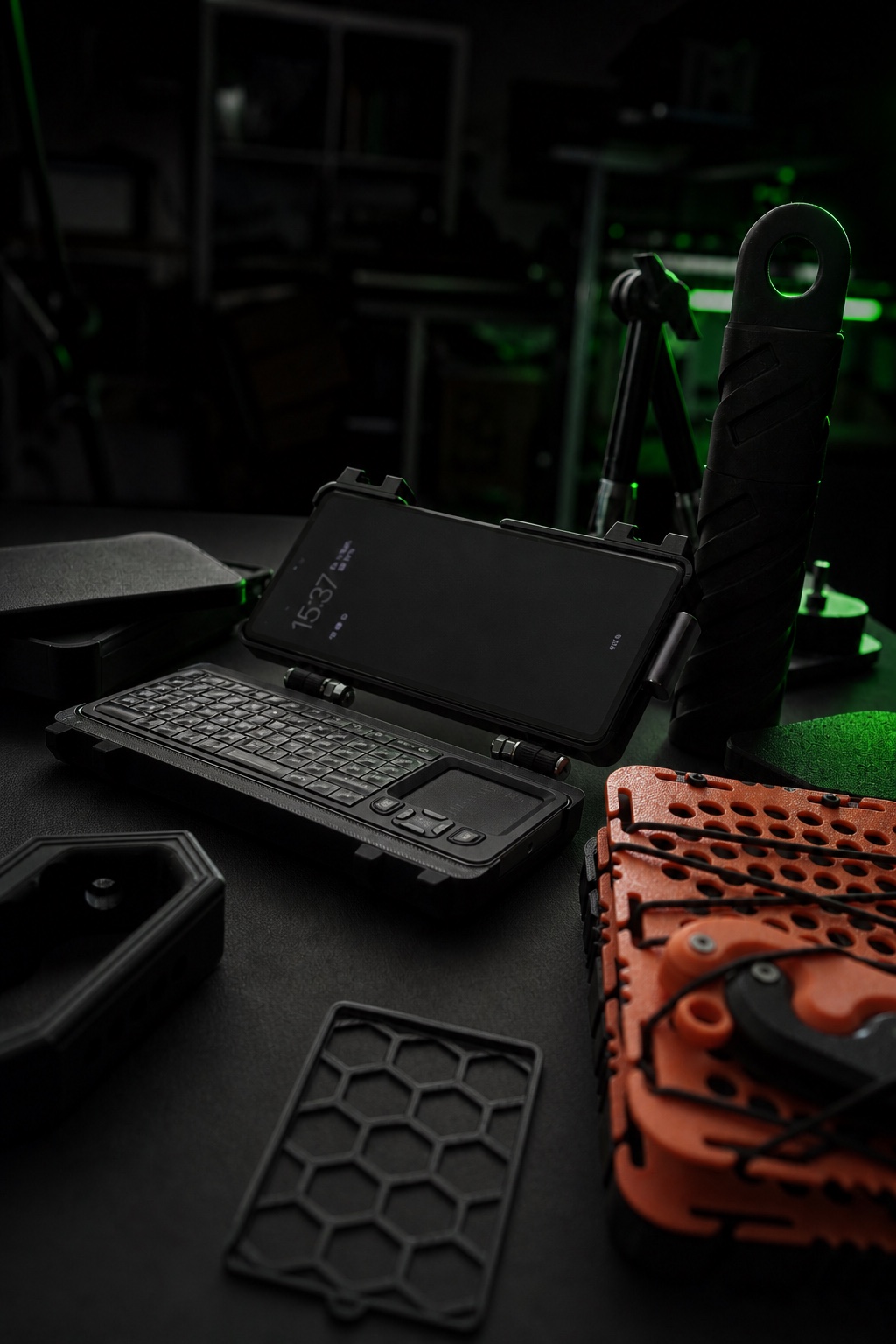
Kein fertiges Produkt und keine Hochglanz-Rückschau: Dieser Eintrag hält fest, was gebaut, getestet, verworfen und als Nächstes überprüft wird.
The newsdesk loop of 17 October 2026 scanned 58 YouTube feeds and logged 19 fresh uploads. The sharpest one is titled 'Is AI computer use actually ready for prime time?' and comes from the channel Julian Goldie SEO. The channel sells agent setups, which is precisely why the video reads well: instead of a demo dream it delivers a field report from the front row of daily operation. The test subject is a computer-use agent with its own machine in the cloud, screen control and spoken task instructions. The verdict is sobering: the tested state of the art is not ready for unsupervised running. This piece places that observation against the publicly documented state of the art. The video serves only as the trigger and entry signal; every piece of evidence here traces to linked sources accessed on 17 October 2026. One limit belongs up front: the video's test scope is small, subjective and not reproducible, and that boundary is stated plainly further down.
What the reality check shows: the screen sits still
The core observation is blunt. The tested agent keeps its own computer in the cloud, control can be taken over or requested, and on a spoken task it answers and starts working on its screen. Asked to use its own screen to check the latest news in AI automation, it agreed. Then the screen sat still. The tester took over by hand, clicked through the task himself, and made the crucial point explicit: the entire purpose of this setup is autonomy, and it broke at the same place every day. His criticism targets the operation, not the capability of the model. It has three prongs. First, the screen freezes repeatedly with no built-in recovery, and the failure is always the same one. Second, he asks why this predictable, near-universal failure was not caught in testing before release, since every user would run into it. Third, the stalled session keeps consuming tokens while running and producing nothing, which is budget burned for nothing. Two qualitative side notes come from the comparison with the Grok bot's computer use: he found the team-member concept genuinely impressive, while the list of installable apps and function plugins looked noticeably smaller than what he knows from the ChatGPT ecosystem. None of this carries a number, and the video names a single tested interface. As evidence about the whole industry that falls short; as an operations report it is exactly the kind of data point worth recording.
The state of the art in 2026: browsers mature, desktops not
The independent context for precisely these symptoms has been on public record all year. A research overview by Zylos, published 8 February 2026 on the state of computer-use and GUI agents, compresses the field into one shift: the core question has moved from 'can it work' to 'how do we make it reliable'. The overview names browser agents as the most mature category of 2026 and concedes that computer-use agents are production-ready for a narrow set of tasks. At the same time it states plainly that they are nowhere near autonomous operation on open-ended desktop tasks, nowhere near reliably handling mission-critical workflows, and nowhere near replacing human judgment in ambiguous scenarios. The numbers come from Firecrawl's review of browser agents in 2026, accessed 17 October 2026: success rates range from 30 to 89 percent depending on the tool and the task. As reported there, the community consensus reads as follows: agents perform well on single-step tasks and supervised workflows, while fully autonomous multi-step tasks still need human-in-the-loop checkpoints. The Browser Use case makes it concrete: the climb from roughly 30 to roughly 80 percent happened, by the report's account, only when full autonomy was traded for a plan-follower model with human oversight. That maps one to one onto the symptom in the video: an agent that says yes and then stalls is not an edge case, it is the expected behaviour of full autonomy at the upper end of its error curve.
Why the same failure arrives every day
Stacking the two layers shows where the field stands. The video complains about a failure that arrives daily and meets no interception. The research overview explains why this is systematic: the reliability of a computer-use agent is not built inside the model but in the operation around it, through checkpoints, clear plan constraints and defined failure handling. The recurring screen freeze is therefore a product gap rather than a model failure in the narrow sense: a vendor shipped an autonomy mode whose best-known fault has no built-in recovery. The actual news item is that a customer has to ask this question in public: pre-release testing for computer use, it appears, is not yet part of anyone's release process. The token cost of a session that runs while standing still is the uncomfortable second half of the same ledger: full autonomy without recovery is not only unreliable, it burns budget during the stall. For tool selection the video's side note supplies a third criterion: ecosystem depth decides practical usefulness, and a noticeably smaller plugin list is a real operational risk even though no demo ever shows it. None of this surprises anyone who runs agents for a living. The news is that the same diagnosis is now delivered loudly by the marketing-facing side of the agent world.
Three operating rules for agents with a screen
Three operating rules follow, anchored in the documented numbers. First, schedule supervision. The jump from roughly 30 to roughly 80 percent at Browser Use came not from a better model but from a mode change with human checkpoints. Whoever runs without checkpoints gives away measured success rates. Second, recovery instead of repetition. The finding of the same freeze every day shows what a tool without re-entry logic does: it repeats one fault endlessly while burning tokens. An agent system should expose three facts about every job: how standstill is detected, what happens next, and who gets notified. Third, vet the ecosystem before committing. The app list that looked thin in the video is the part of the system where it hangs in the failure case; a noticeably smaller ecosystem pushes real work back onto people. For an operation like the local fleet running several agents this inverts the usual question: the interesting part is not whether a computer-use agent can move a screen, but whether your operation delivers checkpoints, recovery and cost control when it stalls. On the current evidence, the tooling level needs another product generation or two before that question can be delegated to the tool itself.
Framing: what this check can establish and what it cannot
The limits of this check deserve their own paragraph, because the trigger is a single source. The video is a field report from one channel whose interest in selling agent setups has to be assumed; its observations carry no number, no timestamp and no reproducibility. The linked overviews by Zylos and Firecrawl are themselves secondary sources with their own interests, but they hold the only publicly available number ranges for success rates. What the check can legitimately establish: the claim that computer use is ready for prime time is testable, and on the current evidence it fails for open-ended desktop tasks while holding at least conditionally for supervised browser tasks. Operators knew this from their own practice long before. The only new element is that the same diagnosis arrived in the same week from a marketing-driven channel and from the research overview.
- 8 February 2026
Zylos publishes its research overview on computer-use and GUI agents, moving the field's core question from capability to reliability.
- 2026, undated
Firecrawl's review of browser agents documents success rates between 30 and 89 percent and the Browser Use jump from roughly 30 to roughly 80 percent via a plan-follower mode with human oversight. Accessed 17 October 2026.
- 17 October 2026
The feed check finds 19 new videos across 58 feeds and selects the computer-use field report by Julian Goldie SEO as the trigger; the upload date is not inferred from the feed check.
- 17 October 2026
This draft and its German twin are filed in the same run as drafts and wait for Marcel's review.
FAQ
What is computer use for AI agents?
An operating mode in which an AI agent drives a machine itself, in the tested case its own cloud computer with screen control, to run tasks such as research or administration on its own. Source: trigger video by Julian Goldie SEO, arrived in the feed check of 17 October 2026.
Is computer use mature in 2026?
For open-ended desktop tasks, no; for browser tasks with human oversight, at least conditionally. The Zylos research note of 8 February 2026 calls browser agents the most mature category while conceding that computer use is far from autonomous operation in mission-critical workflows. Source: zylos.ai, accessed 17 October 2026.
How high are the success rates of browser agents?
Between 30 and 89 percent depending on tool and task, according to Firecrawl's review, accessed 17 October 2026. In the Browser Use case the rate rose from roughly 30 to roughly 80 percent once full autonomy was swapped for a plan-follower mode with human oversight, by the same report.
Why does the screen keep freezing in the video?
The tester describes a recurring freeze without built-in recovery, in which the session keeps consuming tokens while standing still, and asks why a failure every user would meet was not intercepted before release. The video documents the observation; it offers no root-cause analysis.
What does this mean for running your own agents?
Plan supervision, demand recovery instead of repetition, and vet the app ecosystem before committing. The evidence argues against running multi-step tasks fully autonomously without human-in-the-loop rails. Limit of this check: one field report as trigger, numbers only from the linked overviews.
About the author
About the author: I am Marcel, a graphic designer and operator of the HUNTER cyberdeck on a Google Pixel 6a. The newsdesk check of 17 October 2026 found 19 new videos across 58 YouTube feeds, and the computer-use field report was selected as the most relevant AI story. The video serves solely as the trigger; every claim traces to the linked primary sources, accessed 17 October 2026.
Sources
Sources: Zylos Research, Computer Use and GUI Agents in 2026: State of the Art, zylos.ai, published 8 February 2026, accessed 17 October 2026. Firecrawl, 11 Best AI Browser Agents in 2026, firecrawl.dev, accessed 17 October 2026. Julian Goldie SEO, Is AI computer use actually ready for prime time? Let's dive into the reality., YouTube, arrived in the feed check of 17 October 2026, used as trigger only.
Julian Goldie SEO on YouTube (trigger, feed check 17 October 2026) ↗
Nachgebaut oder getestet?
Teile deine Erfahrung mit genau diesem Build-Log. Reviews werden vor der Veröffentlichung moderiert.
Noch keine Reviews für diesen Eintrag.
Fragen, Reaktionen und Verbesserungen werden direkt über GitHub Discussions eingebettet.
GitHub-Bereich öffnen ↗