Gemini Shrinks to Flash-Lite on October 9: Deadline, Numbers, and Three Workarounds
From October 9, the free Gemini tier answers only with Flash-Lite, and AI Plus loses Pro access the same day. Three workarounds, three conditions: Anthropic for young companies, Qwen3.8-27B locally at the cost of thinking-mode runtime, Mistral Large 4 as an API preview only. Numbers and a checklist.
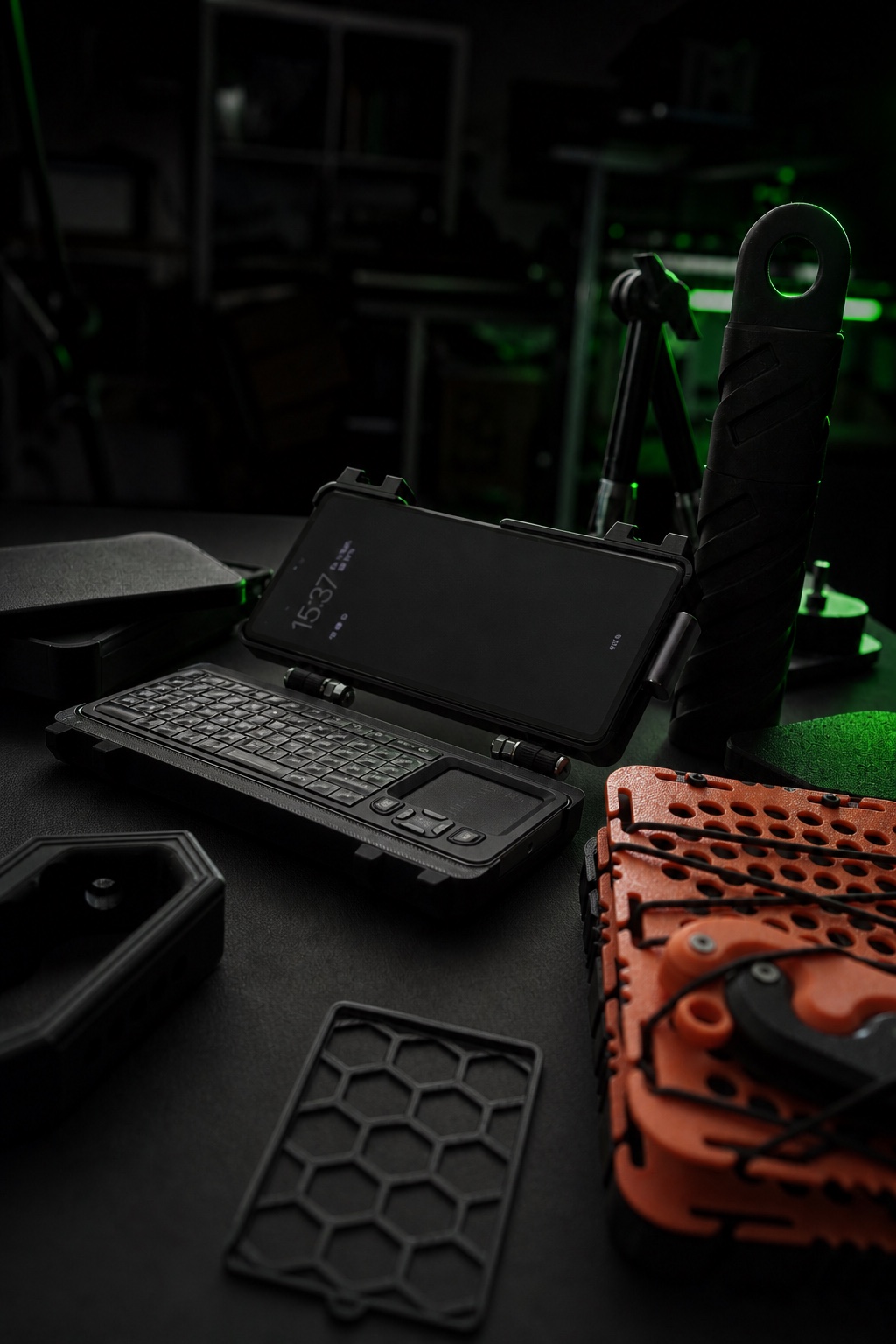
Kein fertiges Produkt und keine Hochglanz-Rückschau: Dieser Eintrag hält fest, was gebaut, getestet, verworfen und als Nächstes überprüft wird.
The feed check of 07.10.2026 flags 27 new videos across the subscribed channels, and the most relevant title is also the most time-sensitive one: on 07.10.2026, Chilikanal walks through what October 9 means for every Gemini user without a paid plan. From that day the free tier shrinks to Flash-Lite, while until now you could pick between Flash-Lite, Flash and Pro. Paying customers are hit too, because AI Plus loses Pro access on the same day. A dated story deserves order rather than hype, so this post carries the checkable numbers, the deadlines, and the fine print of the three detours on offer: the startup-package route from Anthropic, the local path with Qwen3.8-27B, and the preview of Mistral Large 4. The core question: anyone running automations or small agents on the free tier should do a quick inventory before October 9.
The deadline: on October 9, model choice without a subscription ends
Per The Verge, the free tier so far offered Flash-Lite, Flash and Pro as a choice. From October 9, 2026, requests without a subscription run on Flash-Lite only. The regular Flash model moves behind the AI Plus subscription, which The Verge priced at 4.99 dollars per month while other sources quote 7.99 dollars; whether that is a regional or promotional price cannot be settled from the material, so the figure stands with a caveat. This round also touches paying customers: AI Plus subscriptions reportedly lose Pro access on the same day, with a notification email promised in advance. Pro and the Deep Think reasoning mode stay reserved for AI Pro at 19.99 dollars and Ultra at 99.99 dollars. The reasoning-effort levels survive, every model can still be set to low, medium or high, and Google warns that higher levels burn the usage limit faster. Before the deadline, the practical step is this: check which model actually answers in your own chats, while the choice still exists.
Why Flash-Lite is the model that fits the free tier
The change follows a pattern you can read from the sequence of recent months. In April, Google removed the Pro models from the free API tier. In May, the product switched to limits keyed to compute effort, and paying users reported their five-hour quota draining quickly; on May 29 Google walked part of that back, so failed requests no longer count, and Flash-Lite prompts stopped weighing on the quota altogether. A model that Google does not track fits the free tier nicely, on that reading of the sequence. Google has given no reason of its own, and the reading stays an interpretation of the record rather than an official statement. Whether the reasoning-effort levels even matter under Flash-Lite is left open by the report, so anyone planning around the free tier should watch the quota readout directly.
Detour 1: Anthropic gives away a year, with a small gate
The startup program from Anthropic bundles one year of Claude Team with up to five premium seats, on top of 1,000 dollars in API credit. Generous on paper, but per TechCrunch it only covers companies founded within the last five years or that collected funding within the last two. Solo operators without financing and established businesses come away empty-handed. This is not a general free tier but an offer for a narrowly defined cohort, and the eligibility check belongs before the application rather than after. Anyone outside the target group loses no time on this route, since the conditions are stated firmly.
Detour 2: locally with Qwen3.8-27B, numbers instead of promises
The second detour runs locally: Qwen3.8-27B on a DGX Spark, a machine purpose-built for AI work, which Simon Willison used for a test, and not an ordinary desktop. The task sounds harmless: add numbers and spell the result out in words. Without thinking mode the model lands at 23.57 percent across 5,070 cases, with one-to-three-digit addends at 97.04 percent, and still 6.44 percent on ten to thirteen digits. With thinking mode switched on, 167 of 169 answers came out right, one attempt per task, and the run took clearly longer. The test is narrow, but the lesson holds: the setting decides. Anyone going local needs to budget for thinking mode and waiting time. The numbers say nothing about quality on large documents or code, and on commodity hardware the walls come in tighter, as the Chilikanal piece on the 12 GB card shows, where a 125-billion model runs only in heavily compressed stages whose quality nobody has measured yet.
Detour 3: Mistral Large 4, preview now, weights later
The third detour is Mistral Large 4, nicknamed Le Chonk internally. Announced on 06.10.2026 as a public preview over the API on Mistral Studio, the model couples roughly one trillion parameters with 49 billion active ones, is natively multimodal as a mixture-of-experts, and reaches a context window of up to a million tokens with function calling and structured outputs on top. The weights, meaning the download for self-hosting, are announced for the end of October; until then this is another cloud service. On the independent Intelligence Index by Artificial Analysis, the model scores 38 points per the Chilikanal report, against 58 for the leading Claude Opus 5.5, so it is no one-to-one replacement for Pro on these numbers. The model page lists 1.36 dollars per million input tokens and 4.18 dollars per million output tokens for the preview, plus headline results on cyber benchmarks. The same sentence carries the caveat: part of those cyber scores exists because Claude Opus 5.5 and GPT-6 Astra refuse certain tasks, so the benchmark also measures provider policy and not only model capability. Mistral states the model was trained from scratch on 3,800 NVIDIA Grace Blackwell GPUs in its own European datacenters, with training data spanning more than 160 languages.
What to do before the deadline
The routine stays small. First: write down which scripts, automations or habits call Flash or Pro on the free tier. Second: run your own task on Flash-Lite and count how often a wrong answer comes back. If the task survives on Flash-Lite reliably, nothing needs doing. If not, the test batch with your own documents belongs on a second provider before the quota gets tight, and that batch should measure your own error rate rather than the price per request. The threshold is part of the same page: at which error rate do you rather pay? Pro remains available through AI Pro and Ultra, only the price changes, and the personal arithmetic across quota, error rate and subscription step deserves your own numbers, not vendor statements. Freeze nothing on a single model; the decision about a fallback provider comes after the test, not after the benchmark noise of the week.
Related ground already covered in this blog: the daily agent routine with the RAM corpses and the model-swap doors, the used phone turned server, and the open question of background agents that need a budget line their provider actually enforces.
More from the blog
The daily agent routine on a phone: RAM corpses and four doors ↗
OpenAI DevDay 2026: protests against ICE contracts of AI datacenters ↗
What the detours actually cost
All of these detours carry a price, and the prices differ more than the deadline debate suggests. Local, in this case, means dedicated hardware: the DGX Spark is a machine built for AI workloads, not an ordinary office PC, and the Willison numbers show what a model like Qwen3.8-27B delivers there. Without thinking mode it solves only 23.57 percent of the 5,070 addition tasks, with thinking mode 167 of 169 answers come out right, and the hit rate is paid for with clearly longer runtime. The cloud route via Mistral Large 4 sounds more generous, but remains a pre-order until further notice: the public preview has been running on Mistral Studio since 06 Oct 2026, the weights for hosting it yourself are announced for the end of October, so for now this route is a rental as well.
Placing the Artificial Analysis comparison numbers next to it lowers expectations anyway: Mistral Large 4 lands at 38 points on the Intelligence Index, Claude Opus 5.5 at 58, and part of the advantage on cyber benchmarks, going by the same table, comes purely from rival models refusing certain tasks. What remains for your own decision is a sequence, not a recommendation: first list which scripts and automations call Flash or Pro on the free tier, then test them on Flash-Lite and weigh the error rate against your own price threshold, and only when both fail, move the test batch with your own documents to a second provider before October 9. Whoever has only been reading loses the least: the deadline hits automations, not the search for an answer in the evening.
FAQ: deadline, numbers, detours
The short version for later reference, all figures from the linked sources, as of 07.10.2026.
What happens to the free Gemini tier on October 9?
Without a subscription, The Verge reports Flash-Lite only; the earlier choice was Flash-Lite, Flash and Pro. The regular Flash model now needs the AI Plus subscription, AI Plus simultaneously loses Pro access, and Pro including Deep Think stays reserved for AI Pro at 19.99 dollars and Ultra at 99.99 dollars per month.
Why is Flash-Lite the free model of choice?
No official reason has been given. According to reports, Flash-Lite prompts have not counted against the quota since the end of May, and a model that costs Google nothing it tracks fits the free tier well, on that reading.
Who benefits from the Anthropic expansion?
Companies founded within the last five years or that raised money within the last two years. The package: one year of Claude Team with up to five premium seats plus 1,000 dollars in API credit. Solo operators without funding and established businesses come away empty-handed.
How good is Qwen3.8-27B running locally?
On a DGX Spark per the Willison test: 23.57 percent on 5,070 addition tasks without thinking mode, 167 of 169 correct with thinking mode, at clearly longer runtime. Large numbers are an edge case for language models, the setting decides.
What can you realistically do before the deadline?
List the scripts and automations that call Flash or Pro on the free tier, run them on Flash-Lite, and weigh the error rate against your own price threshold. If Flash-Lite falls short, the test batch with your own documents belongs on a second provider, before October 9.
Limits of this post: dates, deadlines and prices follow the Chilikanal report of 06.10.2026, which in turn points to The Verge and TechCrunch; The Verge quotes 4.99 dollars for AI Plus while other sources say 7.99 dollars, and that gap stays open. The Willison numbers on the Qwen task arrive via Chilikanal; I have not read the underlying Willison post myself on this day. The Mistral figures, apart from the pricing line, come from the vendor announcement of 06.10.2026, the benchmarks are self-reported without independent verification, and the Intelligence Index comparison rests on the Chilikanal report. The reading of why Flash-Lite specifically fits the free tier is an interpretation of the sequence, not a Google statement.
About the author: I am Marcel, graphic designer and operator of the HUNTER cyberdeck, an agent setup built on a used Google Pixel 6a. This post rests on the Chilikanal podcast of 07.10.2026 (video wkAu4BzWfA0) with its linked primary sources, all retrieved on 07.10.2026. Last fact-checked on 07.10.2026.
Nachgebaut oder getestet?
Teile deine Erfahrung mit genau diesem Build-Log. Reviews werden vor der Veröffentlichung moderiert.
Noch keine Reviews für diesen Eintrag.
Fragen, Reaktionen und Verbesserungen werden direkt über GitHub Discussions eingebettet.
GitHub-Bereich öffnen ↗