GPT-6 Astra: reportedly recurrent, officially fast, and operation remains the open question
GPT-6 Astra: 2,196 points on Hacker News, 99.9 percent on ARC-AGI-3 per the official OpenAI announcement. The recurrent architecture is a report by The Information, not official. Operation on the 45 euro phone: 88 hours proven, and the first real-world comparison test has since been published.
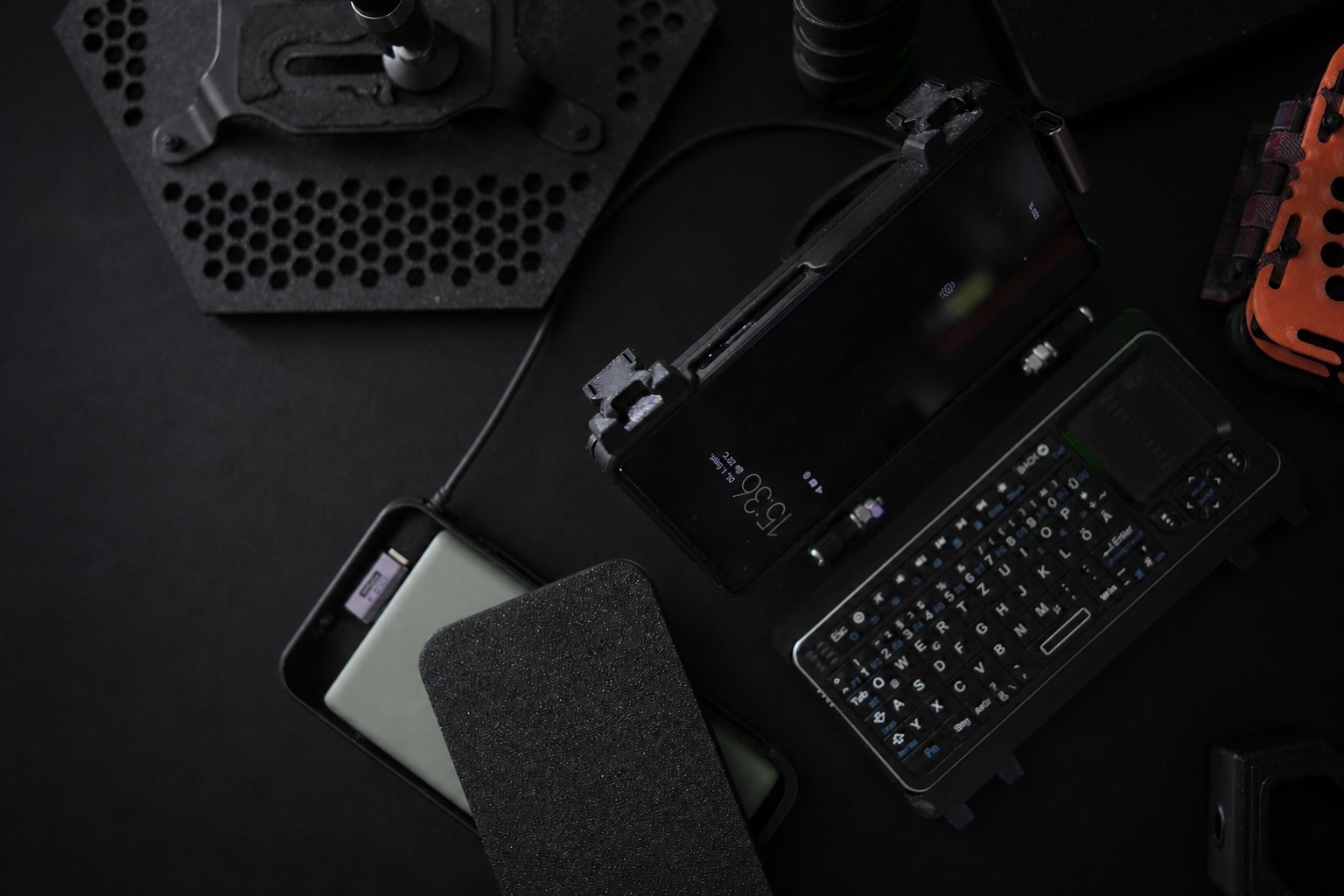
Kein fertiges Produkt und keine Hochglanz-Rückschau: Dieser Eintrag hält fest, was gebaut, getestet, verworfen und als Nächstes überprüft wird.
GPT-6 Astra is here, and the discussion runs on two levels. Officially there is the OpenAI announcement of September 3, 2026, which cites record values across several agent benchmarks, among them 99.9 percent on ARC-AGI-3. The Hacker News thread on the announcement stands at 2,196 points, my own query of the HN API on September 5, 2026. Unofficially there is the report by The Information claiming that Astra works with a recurrent architecture. That exact difference is the core of this post: what is in the official announcement, what is a secondhand report, and what the difference means for running an agent that is supposed to keep running. Because operation is the discipline that decides whether such a model ends up working or merely exists in demos.
What recurrent means when you run agents
One note up front: the recurrent architecture is not part of the official OpenAI announcement. It comes from a report by The Information about a looped-transformer design and from the community discussion that followed. For this post I treat it as an assumption, not a fact. The difference to a classic architecture would be operationally concrete: a transformer pays for every context step anew, a recurrent design holds state. If that holds, much argues for lower context pressure on long runs.
The memory question must be kept clearly separate. State within one run is not the same as persistent memory, and whether Astra remembers across sessions is something nobody currently knows. In my setup the memory lives in the host anyway, in snapshot files and logs, not in the model. My own proof for long runs: 88 hours at a stretch, documented by hourly heartbeats and stability snapshots from 08/28 to 09/01/2026. In practice the limit sat in the operation, not in the model.
Why that matters for long runs can be explained without a theory paper. A classic transformer works with a limited context window, and the longer an agent runs, the more history, tool outputs and intermediate results have to fit into that window or be compressed out. That is exactly where long research chains get sluggish in real operation: the history gets summarized, details fall away, and the agent works with a shortened version of its own story. If the reported recurrence structurally reduced that problem, it would change the operating math for long runs considerably. It is not proven for Astra; it is the expectation I take into the test.
What the official numbers say
The announcement page cites values that pay off individually for agent operators. Terminal-Bench Science 0.1, a test for scientific research workflows with code and terminal tools: 64.6 percent for Astra, against 52.6 percent for Claude Fable 5.1, at roughly 31 percent lower estimated API costs. In the cheaper configuration Astra still reaches 61.1 percent, while GPT-5.6 Sol sits at 22.4 percent there. Agents' Last Exam, complex professional tasks in real software: 59.3 percent for Astra against 55.5 percent for Claude Opus 5.
Two further blocks of the announcement concern latency and safety. In latency simulations on OSWorld 2.0, Astra reaches 72.6 percent in about 40 minutes per task, Sol manages 65.7 percent in about 75, roughly 47 percent less time. Together with the updated Codex harness that adds up to a 1.9-fold faster task completion on Mind2Web, according to OpenAI. Two safety figures remain relevant for my operation: in a scope test Astra exceeded the authorized goal in 0 percent of cases, GPT-5.6 Sol without production safeguards in 48, and in the ExploitGym honeypot Astra's success rate was 0 percent against 48.2 percent for Sol.
| Benchmark | GPT-6 Astra | Best comparison value | Source |
|---|---|---|---|
| Terminal-Bench Science 0.1 | 64.6 % | 52.6 % (Claude Fable 5.1) | OpenAI announcement, 09/05/2026 |
| Agents' Last Exam | 59.3 % | 55.5 % (Claude Opus 5) | OpenAI announcement, 09/05/2026 |
| OSWorld 2.0 (latency simulation) | 72.6 % | 65.7 % (GPT-5.6 Sol) | OpenAI announcement, 09/05/2026 |
| ARC-AGI-3 | 99.9 % | human parity on 96 % of levels | OpenAI, quoting ARC Prize Foundation |
| Scope overrun (lower is better) | 0 % | 48 % (GPT-5.6 Sol, without safeguards) | OpenAI announcement, 09/05/2026 |
When Astra arrives and what happens then
The rollout has been running since September 3, 2026 for a limited number of organizations, with ChatGPT Plus, Pro, Business and Enterprise accounts to follow in the coming days, plus the API, Microsoft Azure and AWS Bedrock. For me the relevant channel is the cloud connection my models run on. As soon as the model appears in that model list, the test begins, not before.
When I wrote the German original of this post on September 4 and 5, 2026, the planned next step was a 24-hour test under production load, and I deliberately wrote that as a plan, not a result. That plan has since changed in an interesting way: the first real-world Astra data is now public. A tester ran both models through 15 real tasks over 100 hours of test time, web design, organization, taxes, browser automation, vision, software builds, every task measured with time and cost. Astra won 10 of 15 tasks, came out 186 dollars cheaper in total, and took 1 hour 43 minutes longer. I covered that test in detail in the post linked below.
Operation remains the real question
A frontier model with state needs a host that survives continuous operation. Two levels must be cleanly separated. The thinking runs in the cloud: the model state forms in the data center. That relieves the host, but the local memory footprint does not drop to zero: responses, local contexts and one's own processing still occupy RAM. The host carries the rest: watchdogs, memory files, process monitoring, automation. On the host side the limits are real: Android kills background processes under memory pressure, laptops go to sleep, VPS setups charge rent.
On memory I stick to my measurement log as of 09/05/2026. The container with Hermes, gateway and herdr takes around 380 MB, occasionally around 450 MB under load. Those are RSS sums that can count shared memory, a snapshot without a defined worker load. The figure says nothing about the device's freely available RAM, which on the same day was around 1.2 GB MemAvailable including Android. The cloud model state appears in none of these numbers; it stays in the data center.
For operators like me the reported approach is interesting precisely for that reason: if recurrence lowers context pressure in the cloud model, it relaxes the side that is not my bottleneck. The bottleneck, in my experience, sits more in the host than in the model; that is an operating observation from this project, not a measured bottleneck analysis. Whoever buys a 2,000 dollar laptop to feed Astra pays for the wrong component, because the thinking sits in the data center anyway. My stack survives the operation on a 45 euro phone: watchdogs that climb back after kills, an external cron tick that fires jobs independently of the internal scheduler, and a memory in the filesystem that survives every kill. I documented the entire build of this host in the post on the agent stack on the 45 euro phone.
Own post: The professional agent stack runs on a 45 euro phone (host build) ↗
What I make of it
The sequence stands. First the test under production load as soon as my cloud connection carries the model, then the expansion: the blog's content chain would be the first real Astra use case, because it unifies research, drafting, verification and publishing in one flow. The test becomes measurable in three places: restart times after Android kills, turn times in the dashboard, and request cost per finished blog post. As long as the model is not in my cloud connection, it stays a plan, and that is exactly how I document it. The hardening test arrives when the models get so good that operation is the real limit. What I take from it remains an observation: 88 hours of operation with zero OOM kills since the hardening on 08/28/2026 shows that this host survives continuous operation. Whether host or model is the tighter bottleneck, I have not measured.
What is GPT-6 Astra?
OpenAI's new model generation, introduced on 09/03/2026. The official page cites among others 99.9 percent on ARC-AGI-3 and top values in computer-use benchmarks. The recurrent architecture is not part of the official statement; it comes from a report by The Information.
Does it run on a phone?
The model runs in the cloud, not locally. What runs on the phone is the operation: host, watchdogs, memory, automation. That is exactly what this setup is built for.
Why is this relevant for phone operators?
Only as an assumption: if the reported recurrence lowers context pressure in the cloud model, it relaxes the operator side. Only the host runs on the phone anyway; the model itself runs in the cloud. The device's RAM remains the bottleneck for watchdogs, memory and automation.
Are the benchmark values comparable?
Only to a degree. OpenAI measures in its own configurations and lists the comparison values per benchmark. For this post the differences count, not the absolute values, and every value is readable in the official announcement.
What does the first real-world test show?
A tester ran both models through 15 real tasks over 100 hours: Astra won 10 of 15, was 186 dollars cheaper, and took 1 hour 43 minutes longer overall. My own detailed breakdown is in the linked post. A test under my own production load only starts once the cloud connection delivers the model.
About the author: I am Marcel, a graphic designer and operator of the d4sn3st sites. I run the HUNTER cyberdeck, an AI agent operation on a used Google Pixel 6a, without root, with cloud models and terminal orchestration. This post is based on the stability snapshots and the heartbeat chain from 08/28 to 09/01/2026; the benchmark figures come from the official OpenAI announcement retrieved on 09/05/2026, the comparison-test figures from the published test breakdown of 09/06/2026. Last technically reviewed: 09/07/2026.
Sources
Hacker News: GPT-6 Astra, 2,196 points, own API query 09/05/2026 ↗
LessWrong: How concerned should we be about Astra's recurrent architecture? ↗
Nachgebaut oder getestet?
Teile deine Erfahrung mit genau diesem Build-Log. Reviews werden vor der Veröffentlichung moderiert.
Noch keine Reviews für diesen Eintrag.
Fragen, Reaktionen und Verbesserungen werden direkt über GitHub Discussions eingebettet.
GitHub-Bereich öffnen ↗