Kimi K3.1 Pro: Open Weights Close the Frontier Gap to Three Points
Kimi K3.1 Pro enters Artificial Analysis' Intelligence Index at 55 points, rank 4 of 215. Once the weights land on Nov 4, open models run 3 points under the frontier. What that means for agent operations, with numbers and an operations plan.
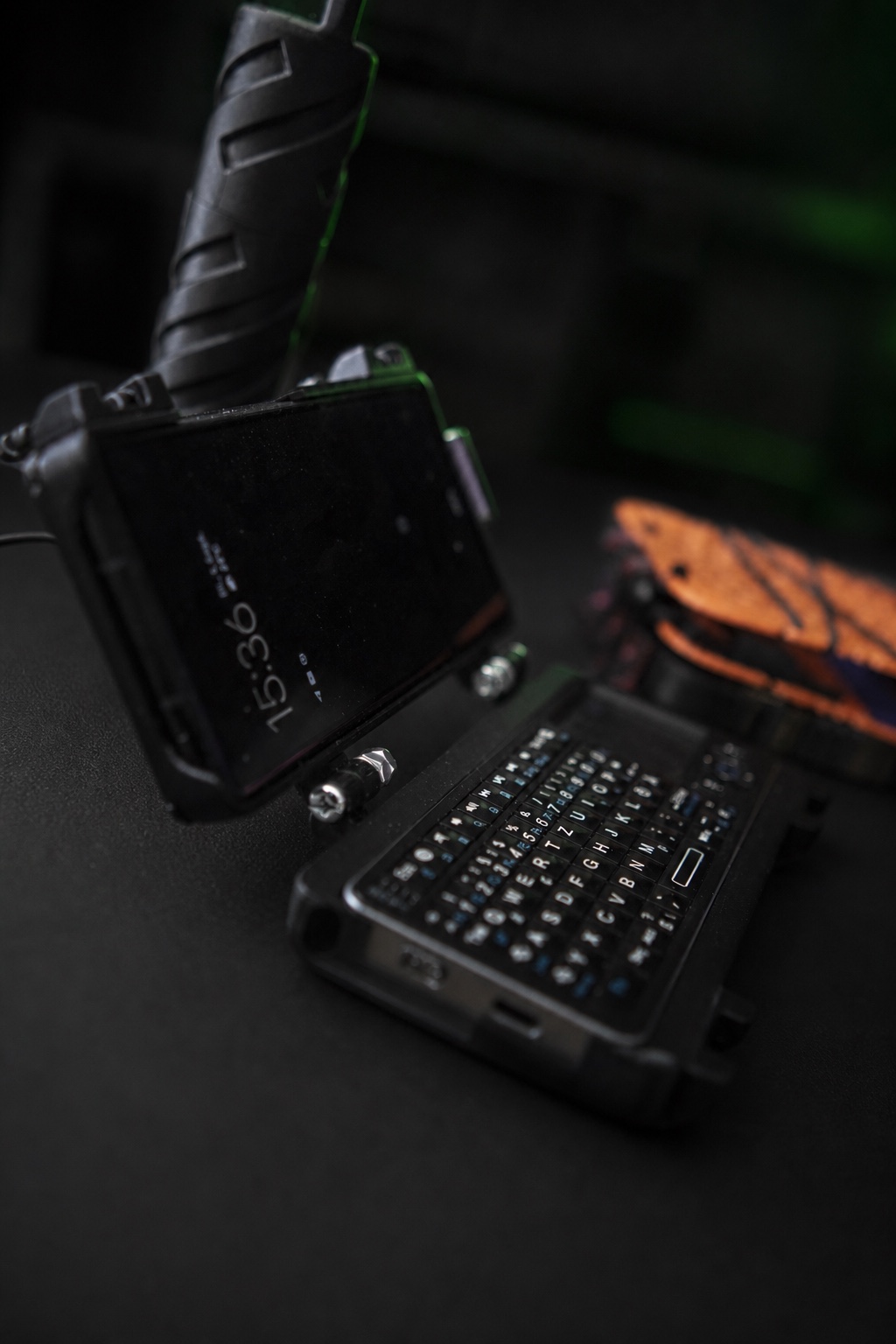
Kein fertiges Produkt und keine Hochglanz-Rückschau: Dieser Eintrag hält fest, was gebaut, getestet, verworfen und als Nächstes überprüft wird.
Moonshot AI shipped Kimi K3.1 Pro on October 23, 2026, and the thread about it crossed a thousand points on Hacker News within a day. I could write this piece about the benchmarks, but the number that changes my operating math sits one level above them. According to Artificial Analysis, once the weights are published on November 4, 2026, the gap between the best open-weights model and the proprietary frontier narrows from 12 points to 3. For anyone running agents, that is not model news, that is capacity planning. So let me be upfront about what this article is and is not: it contains no test of my own, because the weights are not out yet and my probe run is still queued. Every claim here rests on three documented layers, Moonshot's own release material, the independent scoring by Artificial Analysis, and Simon Willison's launch-day notes, all pulled on October 26, 2026. What I can add from my side is the operating view: what the release changes for a small agent fleet and what I intend to do with the one-week window between promise and delivery.
The launch day, measured by the surrounding signals
Catalog data puts the release 99 days after Kimi K3, the longest stretch in the model line since January, and about 15.5 hours after the teaser post. From day one the model was reachable on kimi.com, Kimi Work, Kimi Code, and the Kimi API, under the model identifiers kimi-k3.1-pro and kimi-k3.1-pro-highspeed. The enterprise switch rides disabled by default, administrators flip it on. Moonshot describes the model as a post-trained version of Kimi K3 on an unchanged base with substantially more compute spent after training, and as the first entry in a new K3.1 series. Beyond that, every signal I can independently cite comes from third parties: the Hacker News discussion passed 1,000 points on launch day, Willison ran his first tests the same evening through his llm tooling, and Artificial Analysis had the model scored and ranked in its index within the launch week. That speed tells me the release was timed as a competitive answer rather than a lab reveal, and the scoring data below explains exactly what it was answering.
Spec sheet with two numbers that matter
The technical card is short. Kimi K3.1 Pro is a mixture-of-experts model with 2.8 trillion total parameters and 104 billion active per token, a 1M-token context window, and multimodal input. Pricing on Moonshot's API is $2.00 per million input tokens, $10.00 per million output tokens, and $0.20 on input cache hits. Against Kimi K3 at $3.00, $15.00, and $0.30, that is a one-third cut on both rates. The Highspeed tier runs two to three times faster for double the price, $4.00 and $20.00, with cache hits unchanged. Willison, who tested the model through his llm CLI on launch day, adds the context that makes the cut meaningful: he notes $2.00 and $10.00 match GPT-6.1 Sol's input rate and sit at half of Claude Opus 5.5's output price. So here is the screw that tightens for every agent fleet: a model that scores 11 points above its own predecessor while undercutting that predecessor's rates by a third. Quality moved faster than its price tag.
Where it catches the frontier
I keep the two evidence layers apart, as every comparison should. Artificial Analysis placed Kimi K3.1 Pro at 55 points, rank 4 of 215 on its Intelligence Index, eleven points above Kimi K3's 44. Three models score above it on that list: Claude Opus 5.5 at 58 (with fallback), Claude Sonnet 5.5 at 56, and Muse Wonder Full at 56. Claude Fable 5.1, GPT-6 Astra, and Gemini 4 Argon all sit at 53, level with and just above the Moonshot model in rank order. The decisive sentence in the write-up returns to the gap: once the weights ship, K3.1 Pro becomes the highest-scoring open-weights model, and the distance between the open-weights leader and the proprietary models shrinks from 12 points to 3. On the same house's Cyber Index, the catalog lists it as the number one among open models, which is precisely the discipline agent operations live in. Moonshot's own benchmark runs deserve their label as vendor numbers, though they point the same direction: Terminal-Bench 4.0 at 65.7 against Opus 5.5's 66.4 and GPT-6 Astra's 58.2, SWE Marathon at 51.7 ahead of 46.3 and 42.5, Agents' Last Exam at 43.2 against 42.6, and Humanity's Last Exam with tools at 70.0 versus 67.7. For my coding-agent work two rows carry real weight: Kimi sits 0.7 points under Opus 5.5 on Terminal-Bench, and it leads the SWE Marathon outright.
This is the first time a (soon-to-be) open weight model has scored this highly against the frontier.
The one-week window before November 4
Moonshot's promise, as quoted in Willison's note, is to release the full model weights by November 4, 2026. Until then the model exists only behind Moonshot's own endpoints. After that date anyone can verify the artifact, self-host it, move it into their own infrastructure, or check the vendor's claims against the real thing. Three reasons make this window more than release-day noise. First, the arithmetic: if the scoring lands the way Artificial Analysis has projected, the leading open model will run 3 points under the frontier, which turns a pricing decision into a workload decision, because for many routine agent tasks a 3-point gap no longer justifies paying roughly double the output rate. Second, verifiability: today the 55 exists inside a scoring house's pipeline; with open weights I can put my own runs next to it. Third, dependency planning: a model with published weights can anchor a fallback plan for any operation that does not want its options set by one provider's price card. That is the honest edge of what I can document today. What follows is my concrete plan, not a lived report.
What I am doing with it on my deck
On my own machine the picture is simple: Kimi K3.1 Pro does not run on the deck, I have made no measurements, and I have not sent a probe prompt yet, because a half-test would be worse than none. My fleet splits roles: the coding worker runs through pi under herdr, while my Hermes stack keeps the background operations of the system alive. A phone with a few gigabytes of RAM will never hold 104 billion active parameters locally; I have always run models through interfaces, and the weight release matters to me for verification and fallback, not for on-device inference. The plan for the week after November 4 looks like this: first check whether the scored values reproduce in my own runs over an OpenAI-compatible endpoint, then put a small probe onto the worker slot with routine coding tasks of the kind my established workflow handles, the one that reached 36 out of 36 verified tests through the role split of planning, execution, and verification. One operational driver behind this: the weekly snapshots of my deck show the job count climbing, 18 jobs at the latest checkpoint, and every added role raises the value of not burning output tokens on the most expensive spot. The operating anchor for that is in the table below.
The question I keep coming back to
The interesting question of this release is not whether Kimi beats Opus 5.5. It is whether a model running 3 points under the frontier is good enough for the job at half the output price. Agent runs with many tool iterations spend most of their budget on output tokens, so a model that leads the SWE Marathon and sits 0.7 points under the Terminal-Bench leader while charging roughly half the rate rewrites the economics of every larger automation. My answer will come from the coming weeks, first as a probe on the worker slot, then as a number in my checkpoint notes, and if it holds up it will be a measured series, not a slogan. Until then this piece is a planning sheet with sourced numbers, nothing more. The November 4 window is the chance to rebuild the gap arithmetic myself instead of only reading it.
Moonshot AI tech blog: Kimi K3.1 Pro, Advancing Open Intelligence ↗
Artificial Analysis: Kimi K3.1 Pro launches at 4th on the Intelligence Index ↗
Internal: My operations report: the system stays, the model rotates ↗
Internal: The tempo of releases: Codex, pi, and the two release cultures ↗
Frequently asked questions
What is Kimi K3.1 Pro?
An AI model from Moonshot AI released October 23, 2026, a post-trained version of Kimi K3 with 2.8 trillion total parameters and 104 billion active per token. It carries a 1M-token context window, multimodal input, and a Highspeed tier that runs two to three times faster.
When do the open weights of Kimi K3.1 Pro arrive?
Moonshot has promised to release the full model weights by November 4, 2026. As of my pull on October 26, 2026, the model was available only through kimi.com, Kimi Work, Kimi Code, and the Kimi API.
What does Kimi K3.1 Pro cost?
On Moonshot's API, $2.00 per million input tokens and $10.00 per million output tokens, with input cache hits at $0.20. The Highspeed tier costs $4.00 and $20.00. That is one third less than predecessor Kimi K3 at $3.00 and $15.00.
How good is Kimi K3.1 Pro compared to Claude Opus 5.5 and GPT-6 Astra?
Independently scored by Artificial Analysis at 55 points on its Intelligence Index, where Claude Opus 5.5 stands at 58 and GPT-6 Astra at 53. In Moonshot's own runs it reaches 65.7 on Terminal-Bench 4.0 against Opus 5.5's 66.4 and leads the SWE Marathon at 51.7. Vendor numbers and the independent index read differently by design.
Can I run Kimi K3.1 Pro on my own machine?
Only after the weight release by November 4, 2026, and only with serious compute: 2.8 trillion parameters total, 104 billion active per token. Local inference on a phone is out of the question. I run models from my deck through interfaces and could use the weights at most for verification runs on real server hardware.
About the author
About the author: I am Marcel, a graphic designer running the HUNTER cyberdeck on a used Google Pixel 6a. The operating numbers in this piece come from my deck's own measurement register, the stability-snapshots with the October 26, 2026 checkpoint. Every fact about Kimi was sourced from the linked originals on October 26, 2026; I have no measurements of my own on Kimi K3.1 Pro yet, the probe is planned. Last fact-checked on October 26, 2026.
Sources (retrieved October 26, 2026)
Sources: Moonshot AI, Kimi K3.1 Pro tech blog on kimi.ai (retrieved Oct 26, 2026). Artificial Analysis, launch write-up with Intelligence Index scores and the gap projection (retrieved Oct 26, 2026). Simon Willison, Introducing Kimi K3.1 Pro, Oct 23, 2026, with pricing context and the open-weights quote (retrieved Oct 26, 2026). Catalog details on parameters, prices, and benchmarks: the CellCog launch-data edition with Moonshot tables and the Yotta Labs analysis of Oct 24, 2026 (retrieved Oct 26, 2026). Reception figures: Hacker News launch thread passing 1,000 points, measured Oct 23/24, 2026. Own operating numbers: vault stability-snapshots, checkpoint Oct 26, 2026 07:00 (99 percent alive rate, 10 OOM kills, 676 MiB free, 18 jobs) and prior week Oct 19, 2026 (100 percent, 2 kills, 1,069 MiB, 13 jobs).
Nachgebaut oder getestet?
Teile deine Erfahrung mit genau diesem Build-Log. Reviews werden vor der Veröffentlichung moderiert.
Noch keine Reviews für diesen Eintrag.
Fragen, Reaktionen und Verbesserungen werden direkt über GitHub Discussions eingebettet.
GitHub-Bereich öffnen ↗