OpenAI DevDay 2026: Dots, Space, and Pages turn the agent into a coworker on a leash
Liam Ottley's two-hour livestream on the new OpenAI business ecosystem is the trigger; the facts sit in the DevDay roundup of 30.09.2026: Dots as always-on agents with their own cloud machine, three lines of autonomy, direct work flat and Codex tasks metered, GPT-6.1 Sol at a fifth of Astra's price. An operations read instead of a product show.
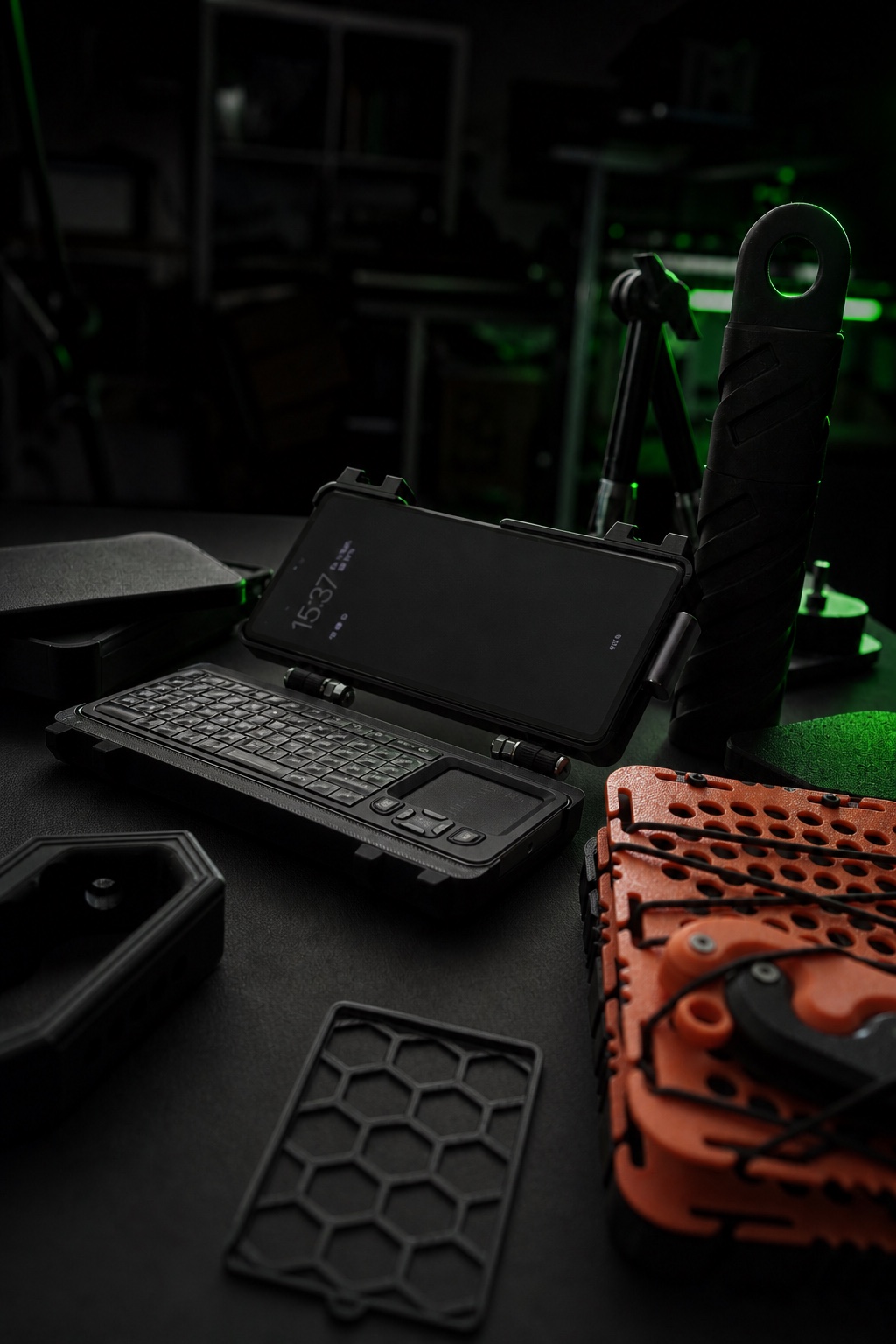
Kein fertiges Produkt und keine Hochglanz-Rückschau: Dieser Eintrag hält fest, was gebaut, getestet, verworfen und als Nächstes überprüft wird.
Twenty fresh videos landed in my feed check on 2026-10-04, nineteen of them assembly-line content and shorts filler, and one title cut straight into my operation: Liam Ottley spends nearly two hours of livestream exploring the new OpenAI business ecosystem around Dots, Space, and Pages. When I pulled it, the stream had no usable transcript, the caption API refused both language tracks with an error, so the video serves as the trigger of this piece, never as its source. The story that actually carries weight comes from elsewhere: The Latent Space roundup on DevDay 2026 dated 30.09.2026 compresses the overhaul into one sentence, OpenAI turned ChatGPT into a workplace where agents sit as coworkers with their own machines. What interests me about that overhaul is not the keynote polish but the operations question: How do you draw the fence around an agent that works on its own, without standing next to it as a bouncer all day? The answer OpenAI shipped is a three-line model, and it lands remarkably close to the rule my own operation already runs under.
What OpenAI announced at DevDay 2026
According to the roundup, the headline card of DevDay is Dots: an always-on agent powered by GPT-6 Astra, with a dedicated cloud computer per instance. A dot connects, per the write-up, to more than 4,000 apps plus Slack and Teams, and while setting it up users draw three lines: what it may do unattended, what requires an approval, and what it must never do. Hooking up your own machine is optional, and the rollout starts in the Pro, Business Premium, and Enterprise tiers. Two companions flank the launch: ChatGPT Space as shared working ground for humans and agents, and Pages as the document layer, both of which read as OpenAI's answer to Notion and the rival office suites. The roundup frames all of it against the installed base, OpenAI reports 1.2 billion weekly active ChatGPT users, which turns the workplace into a feature of a product people already inhabit instead of a migration. For the negotiating position of every competitor, that single sentence outweighs each benchmark row on the same page: the feature arrives in a home billions already occupy.
The boundaries model: three lines instead of one switch
I consider the three-line model the actual product core of the launch. Anyone who runs agents knows the dilemma: too little autonomy turns the agent into a toy, too much turns it into a liability, and the position in between is paid for with permanent babysitting. OpenAI translates that into three settings: what the dot completes on its own, what waits for sign-off, and what stays forbidden. That is the same architecture my own operation runs under: autonomy reserved for approval-free commands, anything with external impact waits for a green light, and certain areas remain off limits no matter what. The difference is where the setting lives; mine sits in setup code, OpenAI expects a user-facing dialog to carry it. Whether such a dialog stays robust in daily use, once an agent negotiates across thousands of connections, is the open question of this overhaul. My expectation is that serious operators will still want the lines drawn in configuration rather than in conversation, versioned and reviewable, exactly as now.
The billing model: direct work flat, delegation metered
The second detail with operational value hides in a billing clarification the roundup attributes to a company statement: the primary dot's direct work does not draw down the plan's quota, while the Codex tasks it spawns do. Translated: the in-house coworker works flat, every dispatch to specialists gets metered. The early use cases line up with that split, developers hand bug triage, failing builds, and pull requests to Codex. Early users reportedly saw proactive behavior; one cited episode describes a dot that negotiated with a customer service line and cut about $500 a year. Episodes like that are anecdotes, not a measurement series, but the structure behind them is a pricing statement about the agent economy: baseline operation migrates into the subscription, scaling arrives as a separate invoice. Anyone who bills in requests and windows, as I do, recognizes the same tension: the flat rate tempts you into nonstop operation, the metered tasks keep the ceiling visible.
What this means for one-person operations
For a one-person shop like mine, the most consequential takeaway is not the feature list but the pricing form of the overhaul: OpenAI folds agent operation into a subscription and makes routine baseline work an unremarkable component of the plan. That is where the agent economy was already drifting, away from the technical demo and toward the procurement logic of office furniture. So the question for small operations is not whether a dot replaces my cyberdeck, it is which tasks fall into the metered column once parts of the operation are delegated to a flat rate. My answer framework stays the one I used for the model price curve: the harness remains, the delegation is a profile in the setup, and the boundary sheet hangs not at the vendor but inside my own operation, on my own controls, with my own change log.
GPT-6.1 Sol: the middle tier gets cheap
The model side of DevDay repeats the pattern I described in the Grok analysis as the price curve: the crown stays where it is, the middle tier gets cheap, and it is the curve, not the crown, that changes operations. Per the roundup, GPT-6.1 Sol sits at $2 per million input tokens and $10 for output, with cached input at $0.10, a discount of 95 percent. The slide-level summary pitches near-Astra intelligence at a fifth of the price, and the benchmark rows stay impressively concrete inside the vendor framing: Sol reportedly ties Astra on DeepSWE, beats Opus 5.5 on AutomationBench at a third of the cost, and lands on OSWorld 2.0 just 2.1 points behind Astra at roughly a seventh of the cost. OpenAI adds claims of about 32 percent fewer factual errors on hard prompts versus the previous Sol, plus better alignment scores. A further Ultrafast mode runs on unnamed in-house silicon per the roundup, and a Decisions API ships as a thin layer over Luna, with vision, without calibration.
What the video adds, and what it does not
Honesty about the trigger requires stating what it yields and what it does not. Liam Ottley's stream ran on 2026-10-04, roughly two hours before my feed check; at pull time the metadata reported 3,037 viewers and a runtime of about one hour fifty-two minutes, and the page source mentioned Dots 22 times, Spaces 12 times, and Pages 12 times. There was no transcript, the caption API broke on both language tracks; livestreams often receive their captions only after the recording ends. The title claims nothing that the official product pages could not back up; it is an exploration, not an exclusive. The old rule from the Grok piece therefore holds unchanged: the video triggers and gets watched for craft, the primary source and its roundup carry the facts. Anyone quoting a creator's claims without checking them is scheduling their own retraction post.
Limits of this piece
Limits: every product and price statement comes from the Latent Space roundup dated 30.09.2026 and from search-index evidence; the OpenAI primary page returned error code 403 instead of content when fetched directly on 2026-10-04, the VentureBeat piece throttled with 429, so both are evidenced by their headlines rather than full text. The roundup aggregates vendor statements, OpenAI is a party, I ran no benchmarks of my own and never operated a dot, and the early-user figures are self-reports. The help center entries for dot and Space are visible in search indexes, but I did not review them for this piece. The model market waits for nobody, DevDay is days old, and every number here is a snapshot as of 2026-10-04, not a forecast.
The interpretation, then: DevDay 2026 sold no new AI, it sold a working contract for agents, three lines of autonomy, a machine of one's own, a shared bench, direct work flat, delegation metered. Those contract terms are what make the theme operationally relevant beyond the product show, because every operator running agents today negotiates the same terms by hand, more slowly and worse documented. My operation keeps them in setup code and pays per request, and I stand by both choices: the lines in configuration, the quota in plain sight. The reconciliation with the subscription world of dots is the next inflection point for the agent economy: once direct work goes flat, the margin migrates into the metered tasks, and whoever controls the meter controls the operation.
More from the blog
OpenAI DevDay 2026: Protests against the ICE contracts of AI data centers ↗
Everyday agent life on a phone: RAM corpses and four doors ↗
Sources (retrieved 2026-10-04)
External sources with retrieval dates:
- Latent Space, [AINews] OpenAI DevDay 2026: Dots, 6.1 Sol, Ultrafast, Decisions API, Agents API, Spaces, Marketplace, and 1.2 Billion ChatGPT WAU, published 30.09.2026, retrieved 2026-10-04: https://www.latent.space/p/ainews-openai-devday-2026-dots-61
- OpenAI, Introducing dots, primary page, HTTP 403 on direct retrieval 2026-10-04, evidenced via the roundup: https://openai.com/index/introducing-dots/
- OpenAI Help Center, Getting started with your dot and Getting started with Space in ChatGPT, verifiable in search indexes on 2026-10-04: https://help.openai.com/en/articles/20001530-getting-started-with-your-dot and https://help.openai.com/en/articles/20001549-getting-started-with-space-in-chatgpt
- VentureBeat, OpenAI launches Dots, always-on AI agent coworkers, and ChatGPT Space where they can collaborate with human teams, headline in search index on 2026-10-04, page fetch throttled with 429: https://venturebeat.com/technology/openai-launches-dots-always-on-ai-agent-coworkers-and-chatgpt-space-where-they-can-collaborate-with-human-teams
- Liam Ottley, Exploring the NEW OpenAI Business Ecosystem: Dots, Spaces, Pages, YouTube livestream of 2026-10-04, no usable transcript, trigger only: https://www.youtube.com/watch?v=AutfckkBP80
Own measurements: feed check of 2026-10-04 (20 new videos), video metadata from the YouTube page (3,037 viewers, runtime 1:52:27, keyword density in page source). No benchmark runs of my own; product and price figures are vendor statements via the roundup.
What are OpenAI Dots?
Per the Latent Space DevDay roundup of 30.09.2026, always-on agents powered by GPT-6 Astra, each with its own cloud computer, connected to more than 4,000 apps plus Slack and Teams. Rollout in the Pro, Business Premium, and Enterprise tiers.
How do you define what a dot may do?
Through three lines: what the agent may do unattended, what requires approval, and what it must never do. Connecting your own machine is optional.
Does a dot's work consume quota?
Per the roundup, the primary dot's direct work does not, while the Codex tasks it spawns do. In other words, a flat rate for the in-house coworker and a metered bill for every dispatch to specialists.
What does GPT-6.1 Sol cost?
Per the roundup, $2 per million input tokens and $10 for output, cached input at $0.10, a 95 percent discount. Vendor claims: ties Astra on DeepSWE, beats Opus 5.5 on AutomationBench at a third of the cost, trails Astra on OSWorld 2.0 by 2.1 points at roughly a seventh of the cost.
How solid are the claims in this piece?
All figures come from the roundup of 30.09.2026 and search-index evidence; the OpenAI page returned 403 on direct fetch, VentureBeat throttled with 429. Vendor statements, no benchmarks of my own, snapshot as of 2026-10-04.
About the author
About the author: I am Marcel, a graphic designer running the HUNTER cyberdeck, an agent setup built on a used Google Pixel 6a. This piece draws on the Latent Space DevDay roundup of 30.09.2026, on search-index evidence of public pages, and on a YouTube livestream as the trigger, all retrieved 2026-10-04. Last fact-checked on 2026-10-04.
Nachgebaut oder getestet?
Teile deine Erfahrung mit genau diesem Build-Log. Reviews werden vor der Veröffentlichung moderiert.
Noch keine Reviews für diesen Eintrag.
Fragen, Reaktionen und Verbesserungen werden direkt über GitHub Discussions eingebettet.
GitHub-Bereich öffnen ↗