Photoshop in Rust: PhotoCraft hits 43,000 stars in 11 days
PhotoCraft rebuilds Adobe Photoshop in pure Rust: 43,009 stars eleven days after repo launch, PSD round trips at 307 of 309 corpus files, 72 of 137 co-author trailers naming Claude Opus 5.5. My October 11 measurement shows why these stars buy a proof structure and where the clean-room principle stops.
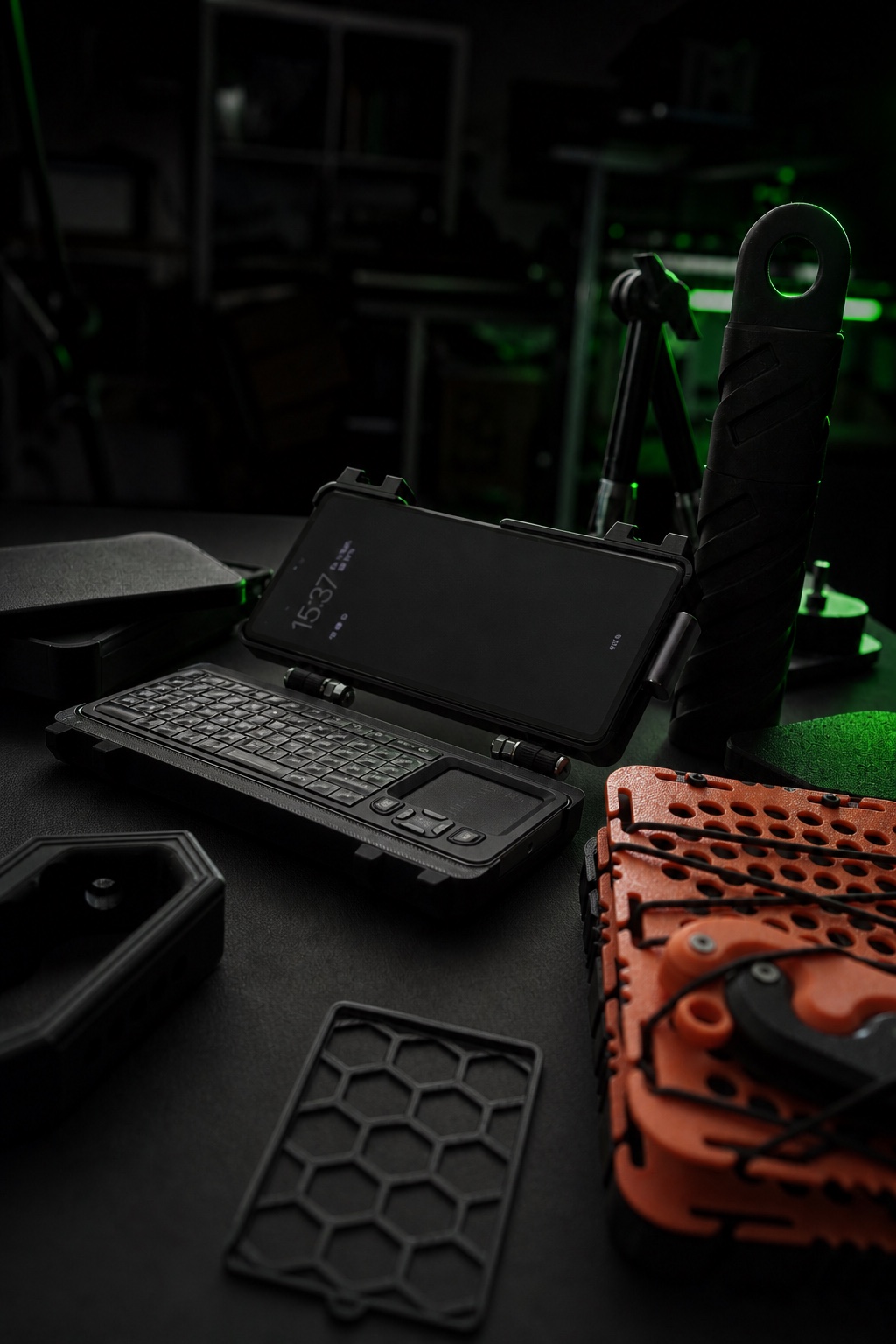
Kein fertiges Produkt und keine Hochglanz-Rückschau: Dieser Eintrag hält fest, was gebaut, getestet, verworfen und als Nächstes überprüft wird.
For three decades Photoshop looked too heavy to rebuild: hundreds of tools, a file format carrying thirty years of baggage, color management down to the bit level. On September 30, 2026, the storytold organization behind ArtCraft opened a repository for that job: PhotoCraft, a clean-room reimplementation of Adobe Photoshop written in pure Rust. Eleven days later my own API pull read 43,009 stars. The handwriting is out in the open: 72 of 137 co-author trailers in the last 100 commits name Claude Opus 5.5, humans run the merges. This post works three levels. First, the repo numbers from my own API pull instead of search results. Second, the README promises against their own evidence: PSD corpus, composite oracle, more than 1,700 tests. Third, what a Photoshop rebuild under agents means for a working desk and where the clean-room principle stops paying. One limit, stated up front: I did not install the program. This post is measurement plus reading, not a hands-on test.
The October 11 measurement: 43,000 stars for a Photoshop rebuild
Numbers first, with method. On October 11, 2026 I queried the GitHub API for the repo and the org page; the raw values sit in my measurement log. The repo opened at 13:37 UTC on September 30, 2026, eleven days before the pull: 43,009 stars, 6,507 forks, 1,030 open issues, Apache-2.0 on the repo page, 99.3 percent of the code in Rust per the language share, the rest WGSL for the GPU renderers. The suite moves with it: lightcraft for Lightroom at 9,191 stars, filmcraft for Premiere Pro at 8,866, pdfcraft for Acrobat at 8,197, vectorcraft for Illustrator at 6,318, effectcraft at 4,675 and cadcraft at 1,953. The five repos my October 9 radar note covered sum to 75,581 stars against 48,997 then: 54.2 percent in two days, PhotoCraft alone rising from 28,446 to 43,009, 51.2 percent. For context, nothing in my GitHub star league of this blog ever kept an average in that range; pi peaked at a few hundred stars per day, PhotoCraft averages in the thousands.
Evidence instead of advertising: PSD corpus, oracle, tests
The fascinating part is not the pace but the proof structure. Per the README, the PSD support lives in its own crate, written against Adobe's public specification and tested against a corpus of real files. Opening and re-saving keeps the render unchanged for 307 of the 309 psd-tools test files, the README states, and for 169 of 170 files in the project's own mixed corpus; anything not modeled yet is carried along, not dropped. A composite oracle compares its render with the image Photoshop produces, covering gradient interpolation, layer styles, shape strokes, clipping and fill opacity. The vector section states 116 of 116 shape layers of the PSD corpus match Photoshop pixel for pixel. On top come two compositors, a CPU reference and a wgpu renderer, tested against each other, more than 1,700 tests, copy-on-write tiles for cheap undo and big canvases, and native CMYK and Lab at 16 and 32 bit. The format list stretches wider than Photoshop's own: PSD and PSB, layered TIFF, OpenRaster for Krita and GIMP, SVG that opens as shape layers, and Affinity documents that open read-only with a warning listing everything unsupported. To the standard question at every rebuild, how far does it actually go, the project answers with corpora, oracles and test counters rather than screenshots. That is what earns my attention: features at agent speed require verdicts at test speed.
The agent core: 72 of 137 co-author trailers read Claude Opus 5.5
My sharpest own measurement concerns the workbench, not the pixels. The last 100 commits came through the GitHub API and got parsed: 137 lines carry a co-author trailer, 72 name Claude Opus 5.5, mostly in the plain form, a few with the 1M context suffix. Humans hold the rest: 45 trailers credit Brandon Thomas, twelve Fabio Lussi, people run the merges, one from a codex-named branch. Agents write, humans review and carry responsibility. The difference from the usual AI-generated repo is density: Claude appears on more than half of the marked commits, and the README routes newcomers and AI agents alike through one file, AGENTS.md. The stars celebrating this tempo implicitly buy the test structure: agent commits without an oracle stay a demo, with a corpus they become a product.
Every action is a command, so you can drive the same engine from the UI, the CLI, a JSON control channel or an MCP server.
— PhotoCraft README, agent-ready section, retrieved October 11, 2026
Built for agents: five hundred commands instead of keyboard magic
The invitation has architecture behind it. Per the README, every menu item, tool and dialog is a command, over 500 in one registry; UI, CLI, JSON control channel and MCP server call the same ones. photocraft-cli runs single commands with parameters and folder batch jobs over action lists, and photocraft-cli mcp exposes the program to any agent speaking the protocol. The desktop app adds an authenticated, loopback-only control channel that reads UI state, drives tools with pointer events and takes offscreen screenshots; per its own note, every README image was rendered that way. The layering is enforced at build time across 24 crates, a pure-data document model with a command engine and a thin egui interface on top. That is the engine and shells pattern I described for coding agents, this time inside a desktop application.
What the clean-room principle solves and leaves open
Clean-room means, per the README, built from public specifications and observed behavior, with no proprietary code, shaders or assets. That discipline buys something rare: a defensible position for rebuilding somebody else's product. It also bounds what the project may claim. PhotoCraft cannot carry the name Photoshop, that is Adobe's trademark; the repo description, clean-room reimplementation of Adobe Photoshop, lives on that tension. How Adobe reacts, I found in no source, so I leave it open. The second limit is working reality: a corpus proves the file format holds, not the designer's day, print production, font handling, a plugin ecosystem. On the project's plugin situation and on Adobe's own AI features such as Generative Fill, the README says nothing; I read that as not available, not as a defect. The third limit belongs in any AI authorship story: a co-author trailer states the sender, it is no quality verdict. The verdict forms in tests, merges and the contributor base, and precisely there the project answers with its test setup.
A designer's stand, deliberately narrow
I am a graphic designer, my path runs from graffiti through calligraphy into logo design, Photoshop sits in my toolbox rather than my belief system. Three tests would settle my questions first: a PSD round trip across one of my own working files with type layers and layer styles, a color check against my ICC profile, and a batch job driven through the CLI, because that exact stage is missing from my blog routine. I ran none of the three. The deck is an Android phone inside a supervised cron window, and a post narrating tests it never ran would be the wrong kind of honesty. So this stays a reading with instruments attached: numbers open, judgments small, recommendations concrete. Whoever wants to try PhotoCraft finds installers for macOS, Windows, Linux, FreeBSD and the web at the releases, running offline without an account per the README; the browser version is a WebAssembly build of the same engine. The headless line fits my own pipeline best: open a file, run a sharpen filter and a curves adjustment, save a PNG, all without opening a window.
September 30, 2026, 13:37 UTC: the repo storytold/photocraft is created, per the GitHub API, retrieved October 11, 2026.
October 2, 2026: first Hacker News thread on the seven apps line, 18 points (HN search archive).
October 6, 2026: HN thread on the Adobe suite port, 132 points and 78 comments.
October 9, 2026: first note in my topic radar: 28,446 stars, 787 commits.
October 11, 2026: second measurement for this post: 43,009 stars, 1,338 commits, 6,507 forks, 72 of 137 co-author trailers with Claude Opus 5.5.
Why I trust the counters, and where I stop
Short accounting, because star numbers can be manufactured. Mine is not a snapshot but a curve: about 28,400 stars and 787 commits on October 9, 43,009 stars and 1,338 commits on October 11, plus 6,507 forks and the same movement, damped, across the sister repos. Faking that curve across several repos in two days would be a project of its own. A divergence: the largest HN thread on the project reached 132 points, small for a star count of this size; my hypothesis is inflow through channels beyond Hacker News, video and social, and I flag it as a hypothesis. What this post does not offer is a look into the source code: no code audit, no security review, both would need their own installation and more time than a cron window gives.
What the Photoshop rebuild means for the agent year 2026
The real lesson sits deeper than the pixels. For weeks this blog has argued that coding agents turn into engines while their interfaces become shells. PhotoCraft shows the pattern in production: a command engine at the core, a thin UI shell, agent access through CLI and MCP, the burden of proof held by corpora instead of marketing slides. The consequence fits in one sentence: the boundary is moving from whether a large program can be built to whether it can be verified. Whoever defines the oracles and corpora ships features at agent speed, and competition gathers around the evidence structure, not the typing pace. My own operation confirms the direction in miniature: the verified projects on my deck were built through the local multi-agent workflow, Hermes plans, the pi agent executes, Hermes verifies, and the 36 passing tests out of 36 stand on contracts, not feelings. PhotoCraft moves the same principle from scripts into full applications. If the pattern holds, the natural question of the coming quarter is about the next corpus: which file format gets its own 307 of 309 moment?
Eight million Codex users: usage caps remain the bottleneck ↗
Sources (retrieved October 11, 2026)
External sources, retrieved October 11, 2026:
- GitHub, repo storytold/photocraft (description, stars, forks, issues, license, language share): https://github.com/storytold/photocraft
- GitHub, the storytold organization holding the ArtCraft suite of rebuilds: https://github.com/storytold
- GitHub, the repo's commit list, last 100 commits (co-author trailers, merge branches): https://github.com/storytold/photocraft/commits/main/
- GitHub, the PhotoCraft README (PSD corpus 307 of 309, composite oracle, more than 1,700 tests, 500+ commands, MCP control, agent note): https://github.com/storytold/photocraft/blob/main/README.md
- GitHub, the project's AGENTS.md (starting point for contributors and AI agents): https://github.com/storytold/photocraft/blob/main/AGENTS.md
- GitHub releases of PhotoCraft (packages for macOS, Windows, Linux, FreeBSD, web): https://github.com/storytold/photocraft/releases
- GetArtCraft, the PhotoCraft product page: https://getartcraft.com/apps/photocraft
- Hacker News, thread on the Adobe suite port, October 6, 2026: https://news.ycombinator.com/item?id=49981449
- Hacker News, thread on the PhotoCraft launch, October 7, 2026: https://news.ycombinator.com/item?id=49986072
Own measurements through the GitHub API (script radar_1110_fetch.py): stars 43,009, forks 6,507, open issues 1,030, commits 1,338, Rust share 99.3 percent, commit scan of the last 100 commits with 137 co-author trailers and 72 Claude mentions, retrieved October 11, 2026.
Own series from the deck's topic radar: PhotoCraft at 28,446 stars and 787 commits on October 9, 2026, five-repo suite baseline 48,997 stars.
What is PhotoCraft?
An open-source rebuild of Adobe Photoshop as a pure Rust application, implemented as a clean-room port from public specifications and observed behavior, per the project description. The Storytold organization behind ArtCraft maintains several such rebuilds.
Can PhotoCraft open and save real PSD files?
According to the README it opens, edits and saves layered PSD and PSB documents, and on re-saving the render stays unchanged for 307 of the 309 psd-tools corpus files. A re-saved file is not byte-identical to the original, but the document model is preserved.
Who built PhotoCraft?
A contributor community around the ArtCraft organization. Across the last 100 commits, 72 of 137 co-author trailers name Claude Opus 5.5, with humans running reviews and merges.
Does PhotoCraft cost anything?
No. The source stands under the dual license MIT OR Apache-2.0, installers for macOS, Windows, Linux, FreeBSD and the web ship with the releases, and per the README it runs offline without an account.
Can you run PhotoCraft productively today?
The status badge says early alpha. What is documented: PSD round trips and a test suite of more than 1,700 tests. What I cannot say, having not installed it, is how the workflow holds up in daily use. My advice to designers: use your own PSD folder as the test corpus first.
About the author
About the author: I am Marcel, a graphic designer running the HUNTER cyberdeck on a second-hand Google Pixel 6a. For this post I measured the repo numbers through the GitHub API on October 11, 2026, parsed the last 100 commit messages and read the README claims against their corpus. I did not run an installation; every statement about the software comes from the README and the repo pages and carries its date there. Operating experience with agent tooling comes from my own setup. Last subject-matter review on October 11, 2026.
Nachgebaut oder getestet?
Teile deine Erfahrung mit genau diesem Build-Log. Reviews werden vor der Veröffentlichung moderiert.
Noch keine Reviews für diesen Eintrag.
Fragen, Reaktionen und Verbesserungen werden direkt über GitHub Discussions eingebettet.
GitHub-Bereich öffnen ↗